





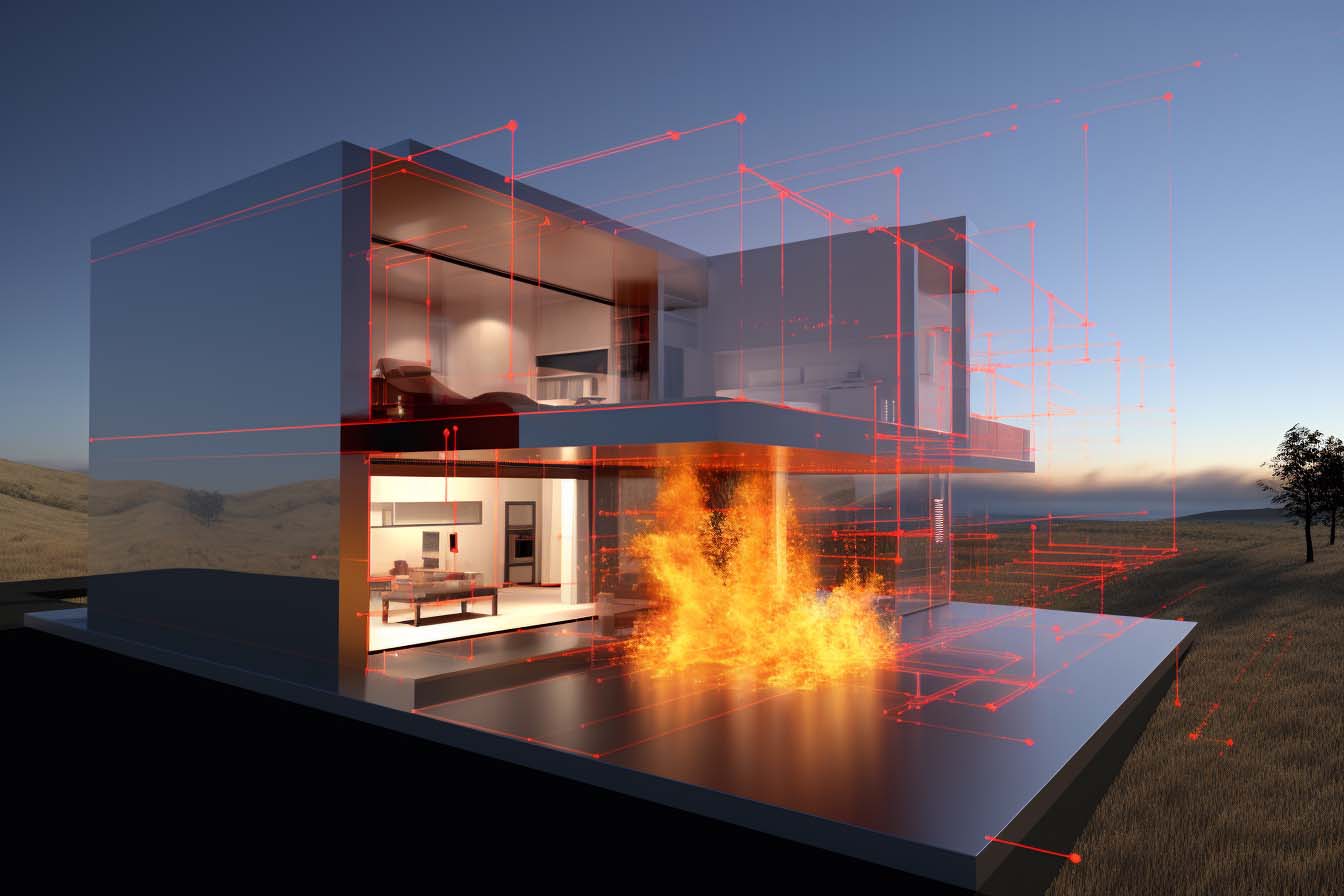
Passive fire protection (PFP) is a critical aspect of building safety, employing fire-resistant materials like walls, floors, and doors to contain fires.
Unlike active systems such as sprinklers, PFP is integral to a building’s design, ensuring stability and regulatory compliance. Alpha Fire Protection expertly integrates these systems for your safety.
Fire safety is paramount in passive fire protection. Effective measures, like fire-resistant materials and evacuation routes, significantly reduce risks during a fire, ensuring the safety of occupants.
Compliance with laws and regulations is essential in passive fire protection. These standards, set by fire safety legislation, dictate the necessary measures to ensure building safety and occupant protection.
The requirements for passive fire protection are specific and critical for building safety. Implementing these standards involves using fire-resistant materials and ensuring proper installation and maintenance, which are key to effective fire protection.
Technical Guidance Document B – Fire Safety
| Requirement Category | Description | Relevant Section(s) | Notes |
|---|---|---|---|
| Fire Performance Standards | Implementation of EU Construction Products Directive standards for fire safety. | Revision Focus (p. 19) | Focuses on new fire performance standards under the EU directive. |
| Building Types | Specific guidance for buildings containing flats, including open-plan flats. | Amendments and Corrections (p. 20) | New guidance primarily related to flats. |
| Design Considerations | Guidelines for the design of buildings or works with material change of use. | Scope and Transitional Arrangements (pp. 22-27) | Applies to design changes from 1 June 2006 and 1 July 2020 onwards. |
| Transitional Arrangements | Conditions for projects started or planned before 1 June 2006. | Transitional Arrangements (pp. 22-24) | Includes planning application and fire safety certificate considerations. |
| Compliance Deadlines | Deadlines for planning applications and fire safety certificates under the new regulations. | Deadlines for Amendments (pp. 25-27) | Important dates include 30 June 2020 and 30 June 2023 for substantial work completion. |
| Construction Phases | Definition of ‘substantial work completion’. | Deadlines for Amendments (p. 27) | Refers to the erection of the structure of the external walls. |
Passive and active fire protection systems are both crucial, but they operate differently.
Passive fire protection (PFP) involves the use of materials and design elements that inherently resist and contain fire and smoke. This includes fire-resistant doors, walls, and compartmentation. These elements are built into the structure and do not require any external activation to function.
On the other hand, active fire protection (AFP) systems require some action, either manual or automatic, to work. These include sprinkler systems, fire extinguishers, and alarms. AFP systems detect fire or smoke and actively work to extinguish or alert, playing a critical role in fire safety strategy.
A fundamental aspect of building design, playing a crucial role in enhancing fire safety.
It refers to the practice of dividing a building into multiple fire-resistant compartments. This approach is aimed at containing a fire within its compartment of origin, significantly slowing or preventing the spread of fire and smoke throughout the building.
The essence of compartmentation lies in creating physical barriers – walls, floors, and doors – that are resistant to fire and smoke.
These barriers are meticulously designed and constructed to withstand fire for a specified duration, typically ranging from 30 minutes to several hours.
This containment strategy not only helps in limiting the damage caused by fire but also provides vital time for occupants to evacuate safely and for emergency services to respond effectively.
Incorporating compartmentation into building design is more than just a compliance measure; it’s a proactive approach to fire safety.
By compartmentalizing a building, architects and builders create a series of fire-resistant cells, each capable of independently withstanding a fire event.
This method is particularly crucial in multi-storey buildings, hospitals, schools, and commercial complexes, where a fire’s rapid spread could have catastrophic consequences.
Fire resistance is a key component of passive fire protection systems, serving as a critical measure in safeguarding buildings against the dangers of fire.
This concept revolves around the ability of building materials and structures to withstand fire, maintain their integrity, and continue to perform their intended function during and after fire exposure.
Fire resistance ratings are a core aspect of passive fire protection.
These ratings, usually measured in hours, indicate the duration for which a building component can resist fire. Ratings are assigned to various elements like walls, floors, and doors, based on standardized tests that measure their ability to withstand heat and structural stress during a fire.
The selection and use of fire-resistant materials are fundamental in achieving effective fire resistance.
Materials such as fire-resistant glass, concrete, steel, and specialized gypsum board are commonly used in construction; notably, these materials enhance a building’s ability to resist the rapid spread of fire and, importantly, maintain structural stability.
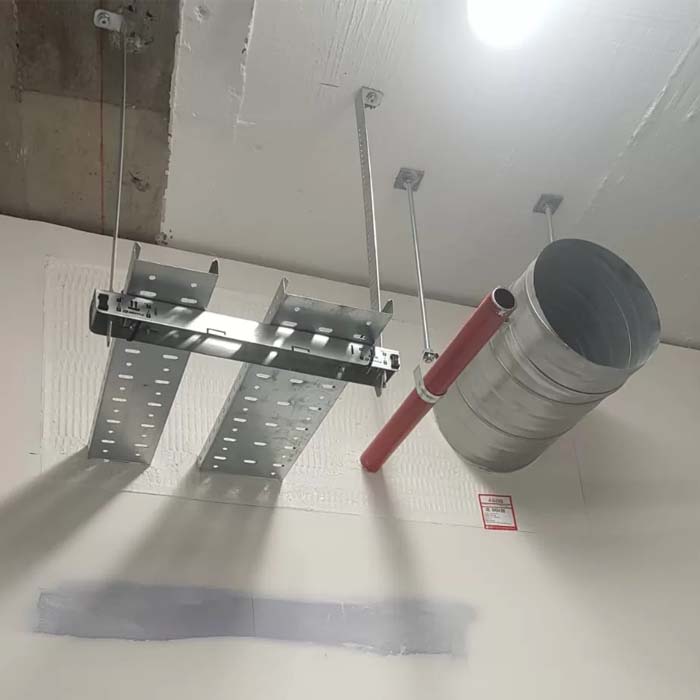
Firestopping is an essential technique used to seal gaps and openings in fire-resistance-rated assemblies.
It plays a crucial role in preventing the spread of fire and smoke through various openings, such as those around pipes and ducts.
The selection and application of firestopping materials, including non-combustible mortars and intumescent mastics, are vital for maintaining the integrity of fire barriers.
Cavity barriers effectively prevent fire spread in concealed spaces, like roof spaces or above suspended ceilings.
These barriers help in sub-dividing large cavities and interrupt potential fire pathways, ensuring that fire compartmentalization within a building is not compromised.
The fire resistance of building elements — walls, floors, and roofs — is critical in passive fire protection.
These elements are constructed with non-combustible materials, and any penetrations through them are meticulously protected with firestopping solutions to sustain the building’s fire resistance integrity.
Protecting structural elements where they intersect with fire barriers is crucial.
Beams, purlins, and rafters, for instance, require adequate firestopping where they meet compartment walls. This ensures that the fire resistance performance of these walls is not undermined by structural intersections.
At Alpha Fire Protection, we understand that each building has its own unique fire safety requirements. Our approach to passive fire protection is highly customized, taking into consideration the building’s design, usage, and specific fire risks.
We conduct thorough assessments to identify the most effective materials and strategies, ensuring every area is adequately protected according to its unique needs.





















© 2023 Alpha Fire Protection Limited. All rights reserved